
The Moment You Notice It
It usually happens on a normal evening. You pull into the garage, hit the button, and instead of the smooth roll you're used to, you hear a rhythmic grinding or rumbling sound, like a shopping cart with a bad wheel. Or maybe the door looks slightly crooked as it closes, one corner dropping a beat slower than the other. You mention it to your spouse. They say it's 'just old' and to give it a good shove next time. You're not so sure. This is usually where the argument starts, and this is usually where two small, cheap parts — the rollers and the cables — are doing the talking.
Worn Rollers: What's Actually Happening
The rollers are the small wheels that ride inside your door's track, guiding each panel up and down. Over years of use, they wear out in predictable ways:
- Nylon rollers develop flat spots or cracks in the wheel itself, especially after repeated heat-cycling.
- Steel rollers lose their lubrication and start grinding metal-on-metal inside the track.
- Either type can develop worn bearings, which is what creates that rumbling or rattling sound as the door travels.
A door with worn rollers isn't broken, exactly. It still opens and closes. But it's working harder than it should, straining the opener, the track, and eventually the springs that weren't designed to compensate for rough, uneven travel.
Frayed Cables: The More Serious Cousin
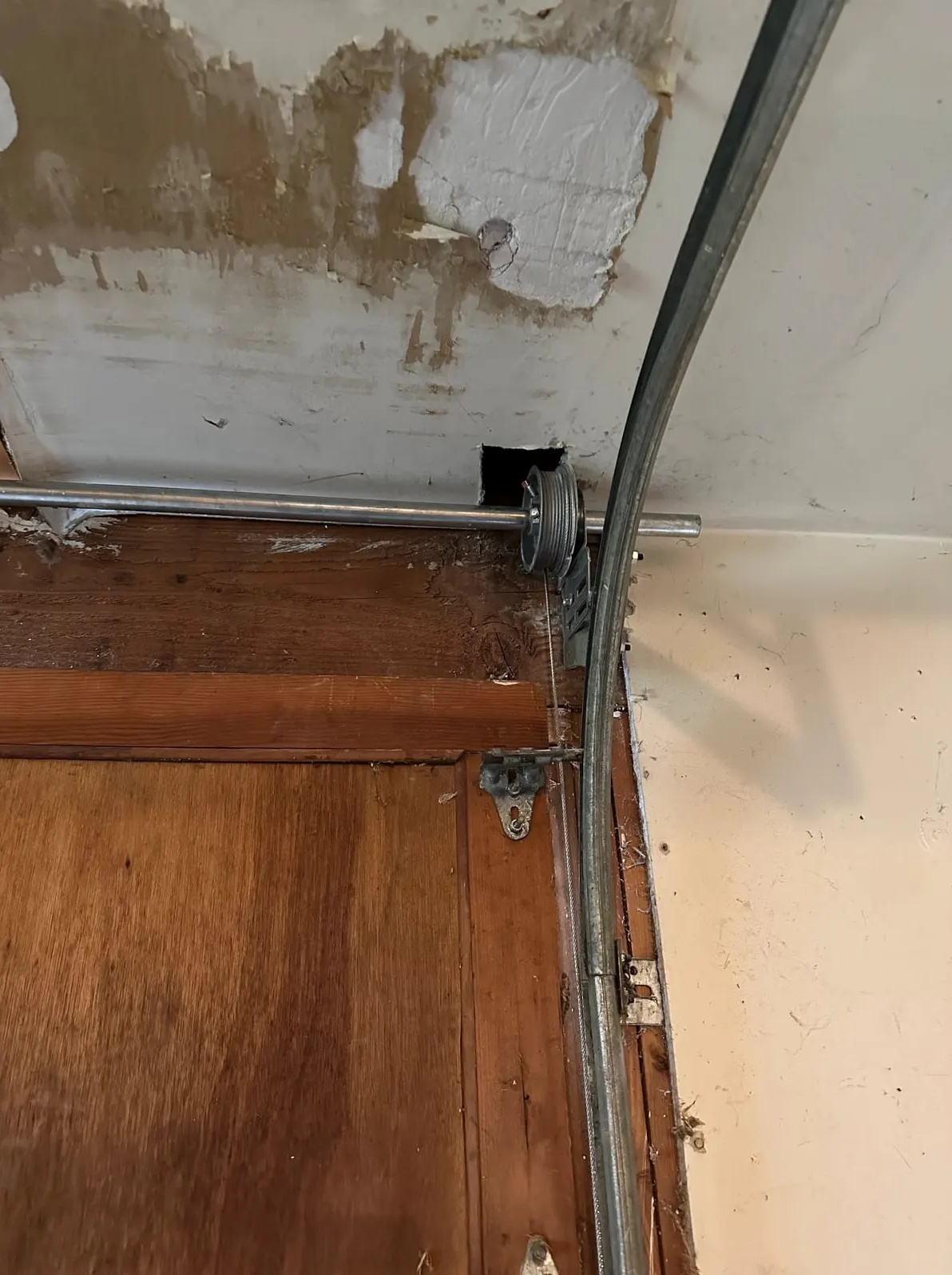
The cables are the steel lines that run from the bottom corners of the door up to the torsion springs, carrying the actual weight of the door. When they're in good shape, you'll never notice them. When they're not, you'll see:
- Visible frayed strands near the bottom bracket or wrapped around the cable drum.
- A door that hangs crooked, with one side noticeably lower than the other when closed.
- A cable that has slipped off its drum, often paired with a loud bang or a door that suddenly stops moving freely.
Frayed cables are not a 'get around to it' problem. A cable under tension that finally gives can let one side of the door drop hard and fast, which is both a safety risk and a good way to bend the track or crack a panel. This is the detail worth winning the argument over.
Why This Wears Faster in Our Part of the Valley
Dust and dry inland heat are hard on exactly these parts. Fine dust works its way into roller bearings and dries out lubrication faster than it would in a milder climate, which speeds up the grinding and flat-spotting. The wide swings between hot, dry stretches and cooler winter rain also put repeated stress on steel cables and the hardware they're attached to, which is part of why doors that looked fine in spring start sounding rough by late fall. If your garage faces west or gets strong afternoon sun through the door seal, that heat exposure adds to the wear on rollers in particular.
What You Can Safely Check Yourself
You don't need tools for this, just eyes and a flashlight:
- Open the door partway and look at the rollers in the track. Are any wheels cracked, chipped, or visibly worn down on one side?
- Watch the door move through a full cycle. Does it shudder, jerk, or travel noticeably slower on one side?
- With the door closed, look at the bottom corners where the cables attach. Any visible fraying, kinks, or loose strands?
- Check if the door sits level when fully closed, or if one side is lower than the other.
Do not touch, loosen, or try to re-tension the cables yourself. They're under spring tension and can snap back with enough force to cause real injury. Visual inspection only — the fix itself is a job for someone with the right clamps and training.
The Trade-offs Worth Knowing
Rollers on the non-spring side are sometimes simple enough for a confident DIYer to replace one at a time, without releasing any tension. That's a reasonable project if you're handy. Cables are a different story entirely — they're installed as a set, under tension, and replacing just one while leaving the other worn is asking for the same problem again within months. If you're going to have a technician out for a cable, it almost always makes sense to replace both at once and have the rollers checked in the same visit, since labor is already on-site either way.
When to Call Clovis Garage Door Service
If you're hearing grinding, seeing a crooked door, or spotting any fraying near the bottom brackets, it's time to call rather than wait for the loud failure. Our Garage Door Repair visits start with a full inspection of the rollers, track, and cables together, since these parts wear as a system. If the cables are compromised, our Spring Replacement service includes properly re-tensioning the system and replacing cables as a matched set, not a patch job. We'll also swap in sealed-bearing rollers that hold up better against dust and heat cycling, so you're not back to square one in another year or two.
If you're in Clovis, Fresno, Sanger, Madera, Selma, Reedley, Kerman, or Kingsburg and your garage door has started grinding, hanging crooked, or just sounds off, give Clovis Garage Door Service a call. We'll settle the argument and fix the door at the same time.