
The Mistake Almost Everyone Makes First
The door is stuck halfway, your car is trapped in the driveway, and you're already running late. So you grab the edge of the panel and try to guide it back onto the track by hand, or you hit the opener button a few more times hoping it will reset itself. It feels logical — the door looks like it just needs a nudge in the right direction. This is also the single most common way people get hurt by a garage door.
A standard residential garage door weighs anywhere from 130 to 400 pounds, and it's held up by torsion springs wound under extreme tension and cables that are doing the same job as a cable on an elevator. When a door comes off its track, it usually means something in that system has already failed — a snapped cable, a broken roller, a bent track, or a spring that let go. The door isn't just "stuck," it's unsupported in a way that isn't obvious from looking at it. Pushing, pulling, or running the opener again can cause it to drop suddenly, and a falling panel moving under its own weight does not stop for your hands.
What's Actually Going Wrong
A few things typically cause a door to derail:
- A broken cable — one side of the door loses support, so the door tilts, binds, and pops a roller out of the track.
- A failed spring — without proper counterbalance, the door drops unevenly and the rollers jump the rail.
- A bent or damaged track — a car bump, a slammed door, or years of settling can warp the rail just enough that rollers can't stay seated.
- Dust and debris buildup in the track — during Clovis's dry stretch, wind-blown dust and dry-season debris can pack into the track grooves, making rollers skip rather than glide.
How bad it gets depends on which of these happened. A roller that jumped the track because of dirt buildup is a relatively simple fix. A door that's off-track because a cable snapped under spring tension is a different situation — the stored energy in that system is still live, and the door can shift again without warning.
What To Do Immediately
- Stop operating the opener. Don't press the button again "just to see." Repeated attempts can grind the roller further into the track, bend it worse, or force a partially-failed cable to snap completely.
- Disconnect the opener if it's safe to reach. Pull the red emergency release cord so the opener isn't fighting against a door that's already off-track. Only do this if the door is not under visible strain or hanging at an odd angle — if it looks like it could drop, skip this step and move to the next one.
- Clear the area. Keep kids, pets, and vehicles away from the opening. If the car is trapped inside, leave it there until the door is repaired rather than trying to back out past a compromised door.
- Look, don't touch. From a few feet back, you can usually tell if a cable has snapped (it will be hanging loose or coiled on the floor) or if a spring looks stretched, broken, or separated. This helps whoever you call diagnose it faster over the phone, but it's for your eyes only.
- Secure the opening overnight if needed. If the door is stuck partway open and you can't get it to close safely, a sheet of plywood or a tarp braced in the opening is a reasonable stopgap against wind, dust, or rain until a technician arrives — just don't use it as an excuse to delay the repair.
What Not to Touch, Ever
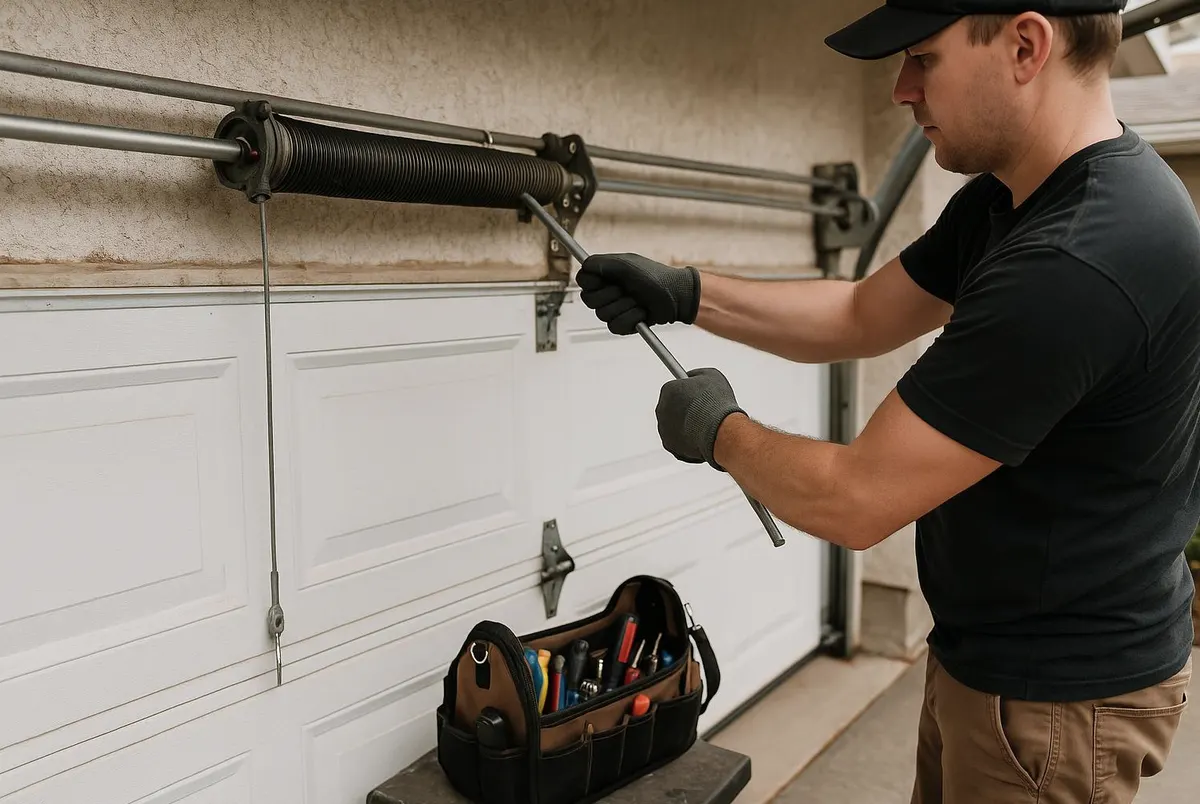
- Torsion springs — wound under hundreds of pounds of tension, these can cause serious injury if they release while you're near them.
- Cables under tension — even a cable that looks slack can still be attached to a loaded spring.
- The track itself while the door is resting against it — bending it back "just a little" to free a roller can shift the door's weight unpredictably.
- Bottom brackets — these anchor the cables and are a common injury point when people try to force a panel back into alignment.
A Seasonal Note for Clovis Homes
Heading into late October and November, Clovis shifts from dry, dusty conditions into the start of the winter rain season. That transition is rough on garage door hardware in two ways: dust that's been settling in tracks and rollers all summer gets damp and turns gritty, and metal components that have been baking all season start contracting as nighttime temperatures drop. Both can make an already-weak roller or slightly bent track finally give out. If your door has been a little noisy or sticky for weeks, this is the season it tends to come off the rail.
When to Call Clovis Garage Door Service
If your door has derailed, this isn't a wait-and-see repair. Call us for Emergency Garage Door Service and we'll come assess whether it's a roller and track issue or something involving a spring or cable. If a spring has failed, our Spring Replacement service restores proper counterbalance so the door operates safely rather than just getting pushed back into place and failing again. We'll also check the opener and rollers while we're there, since a derailment often reveals a second problem that was building quietly.
If your garage door has jumped the track anywhere in Clovis, Fresno, Sanger, Madera, Selma, Reedley, Kerman, or Kingsburg, give Clovis Garage Door Service a call today — we'll get it back on track safely and get your garage working the way it should.